Bro C's Teaching Emporium

Eternity Is Our Field

Page 3 of 5

Promised Temple Blessings

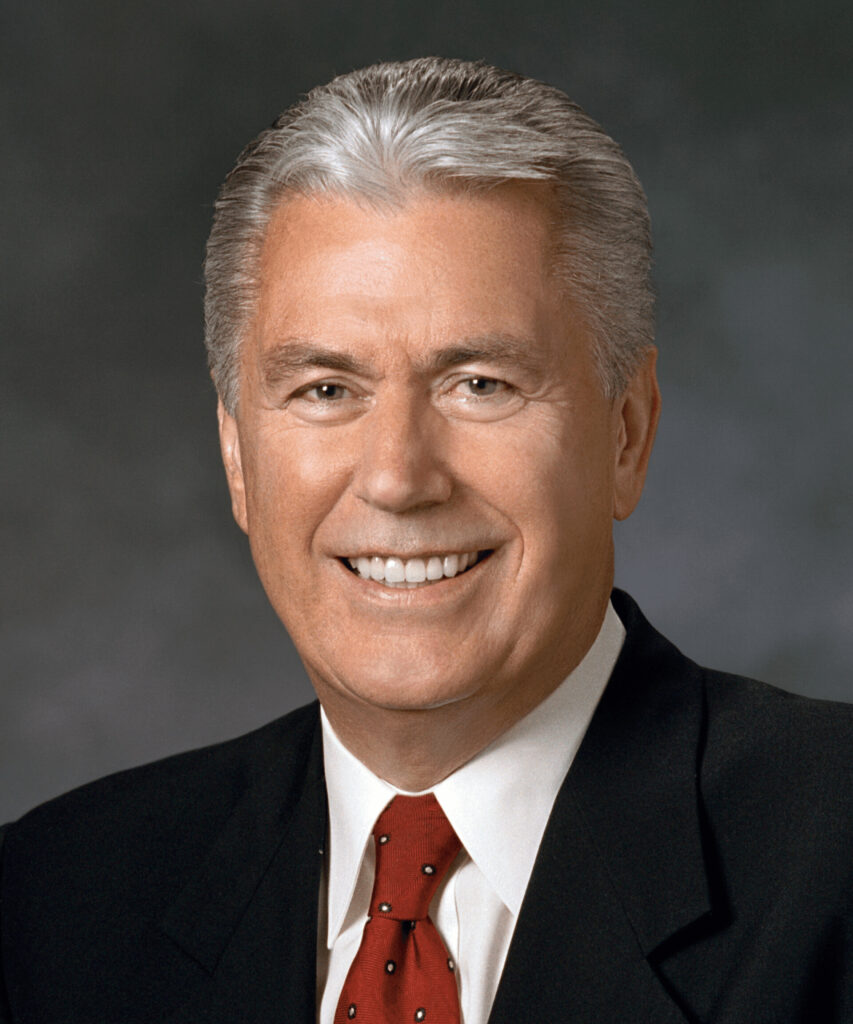
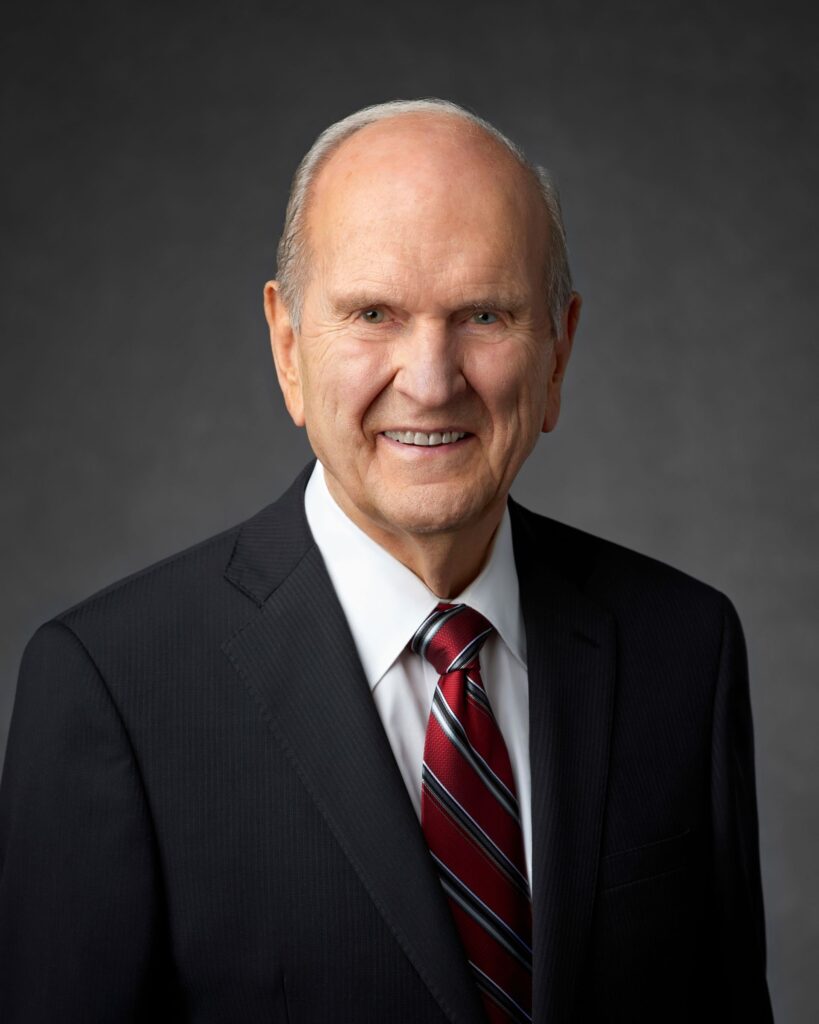
Read the following excerpts from President Russell M. Nelson. As you read, look for the “crazy promises” the Lord is extending to us as we attend the temple.

The Temple and Your Spiritual Foundation, Conference October 2021

My dear brothers and sisters, these are the latter days. If you and I are to withstand the forthcoming perils and pressures, it is imperative that we each have a firm spiritual foundation built upon the rock of our Redeemer, Jesus Christ.

So I ask each of you, how firm is your foundation? And what reinforcements to your testimony and understanding of the gospel are needed?

The temple lies at the center of strengthening our faith and spiritual fortitude because the Savior and His doctrine are the very heart of the temple. Everything taught in the temple, through instruction and through the Spirit, increases our understanding of Jesus Christ. His essential ordinances bind us to Him through sacred priesthood covenants. Then, as we keep our covenants, He endows us with His healing, strengthening power. And oh, how we will need His power in the days ahead.

We have been promised that “if [we] are prepared [we] shall not fear.” This assurance has profound implications today. The Lord has declared that despite today’s unprecedented challenges, those who build their foundations upon Jesus Christ, and have learned how to draw upon His power, need not succumb to the unique anxieties of this era.

Temple ordinances and covenants are ancient. The Lord instructed Adam and Eve to pray, make covenants, and offer sacrifices. Indeed, “whenever the Lord has had a people on the earth who will obey His word, they have been commanded to build temples.” The standard works are replete with references to temple teachings, clothing, language, and more. Everything we believe and every promise God has made to His covenant people come together in the temple. In every age, the temple has underscored the precious truth that those who make covenants with God and keep them are children of the covenant.

Thus, in the house of the Lord, we can make the same covenants with God that Abraham, Isaac, and Jacob made. And we can receive the same blessings!

….If you don’t yet love to attend the temple, go more often—not less. Let the Lord, through His Spirit, teach and inspire you there. I promise you that over time, the temple will become a place of safety, solace, and revelation.

Becoming Exemplary Latter-day Saints Conference, Oct 2018

Now let’s turn to the topic of temples. We know that our time in the temple is crucial to our salvation and exaltation and to that of our families.

After we receive our own temple ordinances and make sacred covenants with God, each one of us needs the ongoing spiritual strengthening and tutoring that is possible only in the house of the Lord. And our ancestors need us to serve as proxy for them.

My dear brothers and sisters, the assaults of the adversary are increasing exponentially, in intensity and in variety. Our need to be in the temple on a regular basis has never been greater. I plead with you to take a prayerful look at how you spend your time. Invest time in your future and in that of your family. If you have reasonable access to a temple, I urge you to find a way to make an appointment regularly with the Lord—to be in His holy house—then keep that appointment with exactness and joy. I promise you that the Lord will bring the miracles He knows you need as you make sacrifices to serve and worship in His temples.

Building and maintaining temples may not change your life, but spending your time in the temple surely will. To those who have long been absent from the temple, I encourage you to prepare and return as soon as possible. Then I invite you to worship in the temple and pray to feel deeply the Savior’s infinite love for you, that each of you may gain your own testimony that He directs this sacred and ageless work.

Excerpts from “Saints” vol 1 “Ye Shall Receive My Law”

Excerpts from Saints Vol 1 Chapt 11 “Ye Shall Receive My Law”

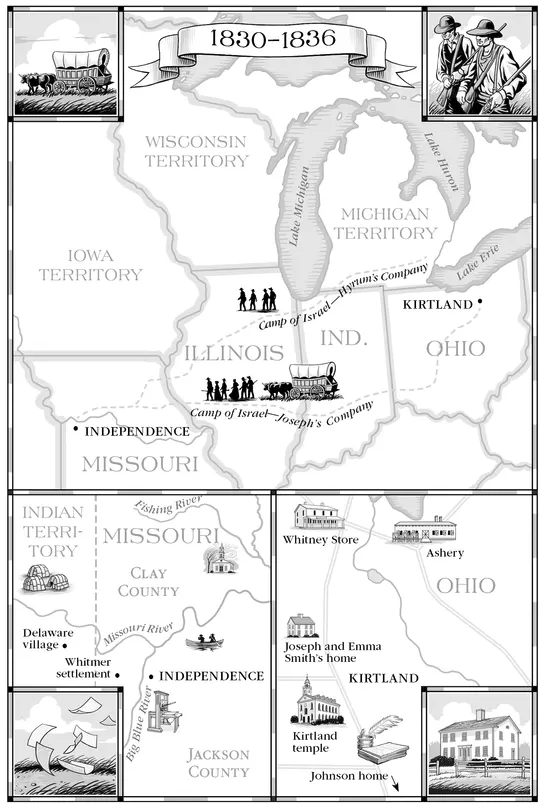
Ann and Newel Whitney were grateful to have Joseph and Emma in Kirtland. Although the Whitneys had three small children and an aunt living with them, they invited the Smiths to stay in their house until they found a place of their own. Since Emma was far along in her pregnancy, Ann and Newel moved into an upstairs room so she and Joseph could have the bedroom on the ground floor.1

After settling into the Whitney home, Joseph began to visit new converts. Kirtland was a small cluster of houses and shops on a hill south of the Whitneys’ store. A small creek ran alongside the town, powering mills and feeding a larger river to the north. About a thousand people lived there.2

As Joseph visited church members, he saw their enthusiasm for spiritual gifts and their sincere desire to pattern their lives after the saints in the New Testament.3 Joseph loved the gifts of the Spirit himself and knew they had a role in the restored church, but he worried that some Saints in Kirtland were getting carried away in their pursuit of them.

He could see that he had serious work to do. The Kirtland Saints had more than doubled the size of the church, but it was clear they needed additional direction from the Lord.

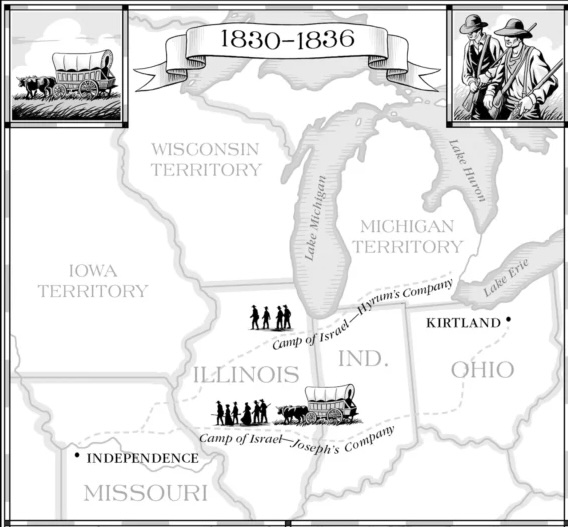
Eight hundred miles to the west, Oliver and the other missionaries arrived in the small town of Independence in Jackson County, Missouri, on the western border of the United States. They found lodging and work to support themselves and then made plans to visit the Delaware Indians who lived on territory a few miles west of town.4

The Delaware had recently moved to the territory after they were forced off their land by Indian removal policies of the United States government. Their leader, Kikthawenund, was an old man who had struggled for more than twenty-five years to hold his people together while settlers and the U.S. Army pushed them west.5

On a cold day in January 1831, Oliver and Parley set out to meet Kikthawenund. They found him sitting beside a fire in the center of a large cabin in the Delaware settlement. The chief shook their hands warmly and motioned for them to sit on some blankets. His wives then placed a tin pan full of steaming beans and corn in front of the missionaries, and they ate with a wooden spoon.

Aided by a translator, Oliver and Parley spoke to Kikthawenund about the Book of Mormon and asked for a chance to share its message with his governing council. Kikthawenund was normally opposed to letting missionaries speak to his people, but he told them he would think about it and give them his decision soon.

The missionaries returned to the cabin the next morning, and after some discussion, the chief called a council together and invited the missionaries to speak.

Thanking them, Oliver looked into the faces of his audience. “We have traveled the wilderness, crossed the deep and wide rivers, and waded in the deep snows,” he said, “to communicate to you great knowledge which has lately come to our ears and hearts.”

He introduced the Book of Mormon as a history of the ancestors of the American Indians. “The book was written on plates of gold,” he explained, “and handed down from father to son for many ages and generations.” He told how God had helped Joseph find and translate the plates so their writings could be published and shared with all people, including the Indians.

After he finished speaking, Oliver handed Kikthawenund a Book of Mormon and waited as he and the council examined it. “We feel truly thankful to our white friends who have come so far, and been at such pains to tell us good news,” the old man said, “and especially this new news concerning the book of our forefathers.”

But the severe winter weather had been hard on his people, he explained. Their shelters were poor, and their animals were dying. They had to build homes and fences and prepare farms for the spring. For now, they were not ready to host missionaries.

“We will build a council house and meet together,” Kikthawenund promised, “and you shall read to us and teach us more concerning the book of our fathers and the will of the Great Spirit.”6

A few weeks later, Joseph received a report from Oliver. After describing the missionaries’ visit with Kikthawenund, Oliver admitted he was still unsure if the Delaware would accept the Book of Mormon. “How the matter will go with this tribe to me is uncertain,” he wrote.7

Joseph remained optimistic about the Indian mission, even as he turned his attention to strengthening the church in Kirtland. Shortly after meeting the Saints there, he received a revelation for them. “By the prayer of your faith ye shall receive my law,” the Lord again promised, “that ye may know how to govern my church and have all things right before me.”8

From his study of the Bible, Joseph knew that God had given Moses a law as he led his people to the promised land. He also knew that Jesus Christ had come to earth and clarified the meaning of His law throughout His ministry. Now He would once more reveal the law to His covenant people.

In the new revelation, the Lord praised Edward Partridge for his pure heart and called him to be the first bishop of the church. The Lord did not describe a bishop’s duties in detail, but He said Edward was to devote his time completely to the church and help the Saints obey the law the Lord would give them.9

A week later, on February 9, Edward met with Joseph and other elders of the church to pray to receive the law. The elders asked Joseph a series of questions about the law, and the Lord revealed answers through him.10 Some of these answers repeated familiar truths, affirming the principles of the Ten Commandments and the teachings of Jesus. Others gave the Saints new insights into how to keep the commandments and help those who transgressed them.11

The Lord also gave commandments to help the Saints become like Enoch’s people. Rather than share common property, as the people on the Morleys’ farm did, they were to think of all their land and wealth as a sacred stewardship from God, given to them so they could care for their families, relieve the poor, and build Zion.

Saints who chose to obey the law were to consecrate their property to the church by deeding it to the bishop. He would then return land and goods to them as an inheritance in Zion, according to the needs of their families. Saints who obtained inheritances were to act as God’s stewards, using the land and tools they had received and returning whatever was unused to help the needy and build Zion and the temple.12

The Lord urged the Saints to obey this law and continue seeking truth. “If thou shalt ask, thou shalt receive revelation upon revelation, knowledge upon knowledge,” He promised, “that thou mayest know the mysteries and peaceable things—that which bringeth joy, that which bringeth life eternal.”13

Joseph received other revelations that brought order to the church. Responding to the extreme behaviors of some Saints, the Lord warned that false spirits were abroad on the earth, deceiving people into thinking that the Holy Ghost caused them to act wildly. The Lord said that the Spirit did not alarm and confuse people, but rather uplifted and instructed them.

“That which doth not edify is not of God,” He declared.14

Soon after the Lord revealed His law in Kirtland, the Saints in New York made final preparations to gather to Ohio. They sold their land and property at great loss, packed their belongings in wagons, and said goodbye to family and friends.

Elizabeth and Thomas Marsh were among the Saints preparing to move. After Thomas received the pages from the Book of Mormon and returned home to Boston, they had moved to New York to be closer to Joseph and the church. The call to gather to Ohio came just a few months later, so Elizabeth and Thomas packed up once more, resolved to gather with the Saints and build Zion wherever the Lord directed.

Elizabeth’s determination grew out of her conversion. Although she believed the Book of Mormon was the word of God, she had not been baptized right away. After giving birth to a son in Palmyra, however, she asked the Lord for a witness that the gospel was true. A short time later, she received the testimony she sought and joined the church, unwilling to deny what she knew and ready to lend a hand to the work.

“There has a great change taken place with me, both in body and mind,” Elizabeth wrote Thomas’s sister shortly before they left for Ohio. “I feel a desire to be thankful for what I have received and still look for more.”

In the same letter, Thomas shared the news of the gathering. “The Lord calleth for all to repent,” he declared, “and assemble at Ohio speedily.” He did not know if the Saints were going to Ohio to build Zion or if they were preparing for a more ambitious move in the future. But it did not matter. If the Lord commanded them to gather to Missouri, or even to the Rocky Mountains a thousand miles beyond the nation’s western border, he was ready to go.

“We know nothing of what we are to do, save it be revealed to us,” he explained to his sister. “But this we know: a city will be built in the promised land.”15

….The ground was still cold when the first group of Saints left New York. The second group, including Lucy Smith and about eighty others, left a little later. They booked passage on a canal boat that would bring them to a large lake to the west. At the lake, they would then board a steamboat that would carry them to a harbor near Kirtland. From there, they would travel overland for the final leg of their three-hundred-mile journey.21

….While his mother and the New York Saints traveled west, Joseph moved with Emma to a small cabin on the Morley farm. His leadership and the newly revealed law had brought more order, understanding, and harmony to the Saints in Ohio. Now many elders and their families were making great sacrifices to spread the gospel to neighboring towns and villages.

In Missouri, missionary efforts were less encouraging. For a time, Oliver had believed they were making progress with Kikthawenund and his people. “The principal chief says he believes every word of the book,” he had reported to Joseph, “and there are many more in the nation who believe.”27 But after a government agent threatened to arrest the missionaries for preaching to Indians without permission, Oliver and the missionaries had to stop their efforts.28

Oliver considered taking the message to another Indian nation, the Navajo, who lived a thousand miles to the west, but he did not feel authorized to travel that far. Instead, he sent Parley back east to get a preaching license from the government while he and the other missionaries tried to convert settlers in Independence.29

Joseph and Emma, meanwhile, faced another tragedy. On the last day of April, Emma delivered twins—a girl and a boy—with the help of women from the Morley family. But like their brother before them, the twins were frail and died within a few hours of birth.30

On the same day, a recent convert named Julia Murdock passed away after giving birth to twins. When Joseph heard about her death, he sent a message to her husband, John, letting him know that he and Emma were willing to raise them. Heartbroken at his loss and unable to care for the newborns on his own, John accepted the offer.31

Joseph and Emma were overjoyed to welcome the babies into their home. And when Joseph’s mother arrived safely from New York, she was able to cradle her new grandchildren in her arms.32

Preparing for the Second Coming

Stand in Holy Places

Please link the following scriptures to D&C 45:32

Psalm 24:3–4; Isaiah 58:13; Helaman 5:12; 3 Nephi 18:24; Doctrine and Covenants 27:15; 115:5–6

Tag these scriptures as “The Second Coming of Christ” and “Preparing for the Second Coming” and “Standing in Holy Places”

Read the verses and write in your Learning Journal what these verses teach you about preparing for the 2nd Coming.

Read the following quote.  Consider placing them in your scriptures next to D&C 45:32.  In your Learning Journal, write down words and phrases that stand out to you.  What are they teaching us about standing in holy places?

Sister Ann B. Dibb, Young Women General Presidency:

President Ezra Taft Benson counseled, “Holy places include our temples, our chapels, our homes, and the stakes of Zion, which are … ‘for a defense, and for a refuge’ [Doctrine and Covenants 115:6]” [“Prepare Yourself for the Great Day of the Lord,” New Era, May 1982, 50]. In addition to these, I believe we can each find many more places. We might first consider the word place as a physical environment or a geographic location. However, a place can be “a distinct condition, position, or state of mind” [Merriam-Webster Online, “place,” merriam-webster.com/dictionary/place]. This means holy places can also include moments in time—moments when the Holy Ghost testifies to us, moments when we feel Heavenly Father’s love, or moments when we receive an answer to our prayers. Even more, I believe any time you have the courage to stand for what is right, especially in situations where no one else is willing to do so, you are creating a holy place. (Ann M. Dibb, “Your Holy Places,” Ensign or Liahona, May 2013, 115)

Taking the Holy Spirit for Our Guide

Please link the following scriptures to D&C 45:57

Proverbs 3:5–6; Psalm 118:8–9; 1 Nephi 4:6; 2 Nephi 32:5; Moroni 10:5; Doctrine and Covenants 11:12–14

Tag these verses as “The Second Coming of Christ” and “Preparing for the Second Coming” and “Taking the Holy Spirit for Our Guide”

Read the following quote.  Consider placing them in your scriptures next to D&C 45:57.  In your Learning Journal, write down words and phrases that stand out to you.  What are they teaching us about taking the Holy Spirit as our guide?

Elder Dallin H. Oaks:  How do we take the Holy Spirit for our guide? We must repent of our sins each week and renew our covenants by partaking of the sacrament with clean hands and a pure heart, as we are commanded to do [see Doctrine and Covenants 59:8–9, 12]. Only in this way can we have the divine promise that we will “always have his Spirit to be with [us]” [Doctrine and Covenants 20:77]. …

… We must always do the things necessary to retain that Spirit. We must keep the commandments, pray for guidance, and attend church and partake of the sacrament each Sunday. And we must never do anything to drive away that Spirit. Specifically, we should avoid pornography, alcohol, tobacco and drugs, and always, always avoid violations of the law of chastity. (Dallin H. Oaks, “Be Not Deceived,” Ensign or Liahona, Nov. 2004, 46)

Titles and Names of Jesus

Gospel Library: Guide to the Scriptures: Jesus Christ

Assignment:

Pick two names or titles of Jesus that you would like to study or learn more about.  Write what you find about the meaning of the word and how it applies to Jesus.  How does the word/title help us understand what Jesus is like, His character, or what He will do for us.  Then, find two scripture references that use that title.  How does understanding this title help us understand the scripture better?

Example: 

  • Title of Jesus:  Christ 
  • Meaning: a Greek word meaning “the anointed.”  The Hebrew word is “Messiah” also meaning “the anointed one.”  When something or someone  was anointed, it means they were set apart for a specific and holy purpose, they were dedicated for God.  Jesus was called and chosen in the pre-earth life to be our Savior and atone for our sins.  This helps us see that Heavenly Father has a plan, He knew we would need help returning back to Him, so Jesus was called or “anointed” even before the world was created to help His Father’s plan succeed.
  • Scripture reference: Romans 8:17 Just as Christ was foreordained for a purpose, we were also foreordained for a purpose, and through Christ will achieve it if we are faithful during our afflictions. Ephesians 2:6 We are raised to Heaven through Christ—Christ’s purpose and calling was to help us return to Heaven.

The Law of Consecration

The Lord’s Law of Consecration

Find mark and link these references.  In your Learning Journal, write what we are being taught here about the law of consecration.  Use D&C 42: 30 as your starting link.

Elder D. Todd Christofferson of the Quorum of the Twelve Apostles explained:

The Lord’s law of consecration (see, for example, D&C 42:32, 53) … has an economic role but, more than that, is an application of celestial law to life here and now (see D&C 105:5). To consecrate is to set apart or dedicate something as sacred, devoted to holy purposes. True success in this life comes in consecrating our lives—that is, our time and choices—to God’s purposes (see John 17:1, 4; D&C 19:19). In so doing, we permit Him to raise us to our highest destiny. (D. Todd Christofferson, “Reflections on a Consecrated Life,” Ensign or Liahona, Nov. 2010, 16)

Elder Dieter F. Uchtdorf of the Quorum of the Twelve Apostles taught:

Sacrifice and consecration are two heavenly laws that we covenant to obey in the holy temple. These two laws are similar but not identical. …

Consecration is different from sacrifice in at least one important way. When we consecrate something, we don’t leave it to be consumed upon the altar. Rather, we put it to use in the Lord’s service. We dedicate it to Him and His holy purposes. We receive the talents that the Lord has given us and strive to increase them, manifold, to become even more helpful in building the Lord’s kingdom.

Very few of us will ever be asked to sacrifice our lives for the Savior. But we are all invited to consecrate our lives to Him. (Dieter F. Uchtdorf, “Our Heartfelt All,” Liahona, May 2022, 124)

What is the law of consecration? How does it affect me?

Today, we live this law in different ways. For instance, we serve others, accept callings and assignments in the Church and do our best at them, and pay a full tithe and a generous fast offering. When we do what the prophets and the Holy Ghost direct us to do to build up God’s kingdom and help the needy, we are living the law of consecration. (“What is the law of consecration? How does it affect me?,” For the Strength of Youth, Apr. 2021, 31)

Teachings in the Book of Mormon that help understand consecration:

On your own:  Find, mark and link these references to D&C 42:30.  Then read the references and write down in your Learning Journal what each teaches about the law of consecration.

Hearing the Lord

Elder Dale G. Renlund

When you receive any blessing from God, you can conclude that you have complied with an eternal law governing reception of that blessing. But remember that the “irrevocably decreed” law is time insensitive, meaning blessings come on God’s timetable. Even ancient prophets in search of their heavenly home “died in faith, not having received the promises, but having seen them afar off … [and] were persuaded … and embraced them” [Hebrews 11:13]. If a desired blessing from God has not been received—yet—you do not need to go crazy, wondering what more you need to do. Instead, heed Joseph Smith’s counsel to “cheerfully do all things that lie in [your] power; and then … stand still, with the utmost assurance, to see the … arm [of God] … revealed” [Doctrine and Covenants 123:17]. Some blessings are reserved for later, even for the most valiant of God’s children. (Dale G. Renlund, “Abound with Blessings,” Ensign or Liahona, May 2019, 72)

My dear brothers and sisters, our Heavenly Father and Jesus Christ desire to bless each of us. … Blessings from heaven are neither earned by frenetically accruing “good deed coupons” nor by helplessly waiting to see if we win the blessing lottery. No, the truth is much more nuanced but more appropriate for the relationship between a loving Heavenly Father and His potential heirs—us. Restored truth reveals that blessings are never earned, but faith-inspired actions on our part, both initial and ongoing, are essential. (Dale G. Renlund, “Abound with Blessings,” Ensign or Liahona, May 2019, 70)

The Power of Covenants

President Russell M. Nelson

Making and keeping covenants actually makes life easier! Each person who makes covenants in baptismal fonts and in temples—and keeps them—has increased access to the power of Jesus Christ. Please ponder that stunning truth!

The reward for keeping covenants with God is heavenly power—power that strengthens us to withstand our trials, temptations, and heartaches better. This power eases our way. Those who live the higher laws of Jesus Christ have access to His higher power. Thus, covenant keepers are entitled to a special kind of rest that comes to them through their covenantal relationship with God. (Russell M. Nelson, “Overcome the World and Find Rest,” Liahona, Nov. 2022, 96)

All those who have made a covenant with God have access to a special kind of love and mercy. …

Once you and I have made a covenant with God, our relationship with Him becomes much closer than before our covenant. Now we are bound together. Because of our covenant with God, He will never tire in His efforts to help us, and we will never exhaust His merciful patience with us. Each of us has a special place in God’s heart. He has high hopes for us. …

Do you see the significance of this? Those who keep their covenants with God will become a strain of sin-resistant souls! Those who keep their covenants will have the strength to resist the constant influence of the world. (Russell M. Nelson, “The Everlasting Covenant,” Liahona, Oct. 2022, 5–6, 8)

Elder David A. Bednar

Covenant promises and blessings would not be possible without our Savior, Jesus Christ. He invites us to look to Him [see Doctrine and Covenants 6:36], come unto Him [see 3 Nephi 12:20; Moroni 10:32–33], learn of Him [see Matthew 11:29; Doctrine and Covenants 19:23], and bind ourselves to Him [see Doctrine and Covenants 43:9] through the covenants and ordinances of His restored gospel.

Covenants and ordinances are the building blocks that enable us to build our lives upon the “rock of our Redeemer” [Helaman 5:12] and His Atonement. Precisely because faithfully honoring sacred covenants binds us securely to the Savior, He becomes the ultimate source of spiritual direction and strength in our lives. (David A. Bednar, “Bound to the Savior through Covenants,” For the Strength of Youth, Feb. 2022, 5)

Excerpts From “Saints, Vol 1” Chapters 9 and 10

Later in the summer of 1830, Joseph and Emma paid off their farm with the help of friends and moved to Fayette so Joseph could devote more time to the church.16 After they arrived, however, they learned that Hiram Page, one of the Eight Witnesses and a teacher in the Aaronic Priesthood, had started to seek revelations for the church through what he thought was a seer stone.17 Many Saints, including Oliver Cowdery and some members of the Whitmer family, believed these revelations were from God.18

Joseph knew he was facing a crisis. Hiram’s revelations mimicked the language of scripture. They spoke of the establishment of Zion and the organization of the church, but at times they contradicted the New Testament and truths the Lord had revealed through Joseph.

Unsure of what to do, Joseph stayed up praying one night, pleading for guidance. He had experienced opposition before, but not from his friends. If he acted too forcefully against Hiram’s revelations, he could offend those who believed in them or discourage faithful Saints from seeking revelation on their own.19 But if he did not condemn the false revelations, they could undermine the authority of the Lord’s word and divide the Saints.

After many sleepless hours, Joseph received a revelation directed to Oliver. “No one shall be appointed to receive commandments and revelations in this church excepting my servant Joseph Smith,” the Lord declared, “for all things must be done in order, and by common consent in the church.” The Lord directed Oliver to teach this principle to Hiram.

The revelation then called Oliver to go nearly a thousand miles to the western edge of the United States to preach the restored gospel to American Indians, who were remnants of the house of Israel. The Lord said that the city of Zion would be built near these people, echoing the Book of Mormon’s promise that God would establish the New Jerusalem on the American continent prior to the Second Coming of Christ. He did not identify the city’s exact location, but He promised to reveal that information at a later time.20

A few days later, at a conference of the church, the Saints renounced Hiram’s revelations and unanimously sustained Joseph as the only one who could receive revelation for the church.21

The Lord called Peter Whitmer Jr., Ziba Peterson, and Parley Pratt to join Oliver on the mission to the West.22 Emma and other women, meanwhile, began making clothes for the missionaries. Working long hours, they spun wool into yarn, wove or knitted the yarn into cloth, and stitched the cloth together piece by piece.23

Parley had recently returned to Fayette with Thankful after sharing the gospel with her and other members of his family. When he left for the West, she moved in with Mary Whitmer, who gladly welcomed her into her home.

On the way to Missouri, Parley planned to take the other missionaries to the state of Ohio, where his former pastor, Sidney Rigdon, lived. Parley hoped he would be interested in their message.24

That same summer, in a town two days’ journey from Fayette, Rhoda Greene found Samuel Smith, the prophet’s brother, on her doorstep. Rhoda had met Samuel earlier that year when he left a copy of the Book of Mormon at her house. Her husband, John, was a traveling preacher for another faith, and he thought the book was nonsense, but he had promised to take it with him on his circuit and collect the names of anyone interested in its message.

Rhoda invited Samuel inside and told him no one had shown any interest in the Book of Mormon so far. “You will have to take the book,” she said. “Mr. Greene does not seem to feel like buying it.”

Samuel took the Book of Mormon and was turning to leave when Rhoda mentioned that she had read it and liked it. Samuel paused. “I will give you this book,” he said, returning the copy. “The Spirit of God forbids my taking it away.”

Rhoda felt overcome with emotion as she took the book back. “Ask God to give you a testimony of the truth of the work,” Samuel said, “and you will feel a burning sensation in your breast, which is the Spirit of God.”

Later, after her husband came home, Rhoda told him about Samuel’s visit. At first John was reluctant to pray about the book, but Rhoda convinced him to trust Samuel’s promise.

“I do know that he would not tell an untruth,” she said. “I know he must be a good man if there ever was one.”

Rhoda and John prayed about the book and received a testimony of its truth. They then shared it with their family and neighbors, including Rhoda’s younger brother Brigham Young and his friend Heber Kimball.25

In the fall, thirty-eight-year-old Sidney Rigdon listened politely as Parley Pratt and his three companions testified of a new work of scripture, the Book of Mormon. But Sidney was not interested. For years, he had exhorted people in and around the village of Kirtland, Ohio, to read the Bible and return to the principles of the New Testament church. The Bible had always guided his life, he told the missionaries, and it was enough.26

“You brought the truth to me,” Parley reminded Sidney. “I now ask you as a friend to read this for my sake.”27

“You must not argue with me on the subject,” Sidney insisted. “But I will read your book and see what claim it has upon my faith.”28

Parley asked Sidney if they could preach to his congregation. Although he was skeptical of their message, Sidney gave them permission.

After the missionaries left, Sidney read parts of the book and found he could not dismiss it.29 By the time Parley and Oliver preached to his congregation, he had no desire to warn anyone against the book. When he rose to speak at the end of the meeting, he quoted the Bible.

“Prove all things,” he said, “and hold fast that which is good.”30

But Sidney remained uncertain about what to do. Accepting the Book of Mormon would mean losing his employment as a pastor. He had a good congregation, and they provided him, his wife, Phebe, and their six children with a comfortable life. Some people in the congregation were even building a home for them.31 Could he really ask his family to walk away from the comfort they enjoyed?

Sidney prayed until a sense of peace rested over him. He knew the Book of Mormon was true. “Flesh and blood hath not revealed it unto me,” he exclaimed, “but my Father which is in heaven.”32

Sidney shared his feelings with Phebe. “My dear,” he said, “you have once followed me into poverty. Are you again willing to do the same?”

“I have counted the cost,” she replied. “It is my desire to do the will of God, come life or come death.”33

In the fall of 1830, not far from Kirtland, fifteen-year-old Lucy Morley finished her usual housework and took a seat beside her employer, Abigail Daniels. As Abigail worked her loom, moving a weaving shuttle back and forth through crisscrossing threads, Lucy wound yarn onto thin spools. The cloth they wove would go to Lucy’s mother in exchange for Lucy’s services around the Daniels house. With many children under her roof, and no teenage daughters, Abigail relied on Lucy to help keep her family clean and fed.

While the two worked side by side, they heard a knock at the door. “Come in,” Abigail called out.

Glancing up from her spool, Lucy saw three men enter the room. They were strangers, but they were well dressed and looked friendly. All three of them appeared to be a few years younger than Abigail, who was in her early thirties.

Lucy stood up and brought more chairs into the room. As the men sat down, she took their hats and returned to her seat. The men introduced themselves as Oliver Cowdery, Parley Pratt, and Ziba Peterson, preachers from New York who were passing through town on their way to the West. They said the Lord had restored His true gospel to their friend, a prophet named Joseph Smith.

As they spoke, Lucy quietly attended to her work. The men talked about angels and a set of gold plates the prophet had translated by revelation. They testified that God had sent them on their mission to preach the gospel one last time before the Second Coming of Jesus Christ.

When they finished their message, the rhythmic clatter of Abigail’s loom stopped, and the woman turned around on her bench. “I do not want any of your damnable doctrine taught in my house,” she said, angrily waving the shuttle in their faces.

The men tried to persuade her, testifying that their message was true. But Abigail ordered them to leave, saying she did not want them polluting her children with false doctrine. The men asked if she would at least feed them. They were hungry and had not eaten all day.

“You cannot have anything to eat in my house,” Abigail snapped. “I do not feed impostors.”

Suddenly, Lucy spoke up, horrified that Abigail would speak to servants of God so rudely. “My father lives one mile from here,” she said. “He never turns anyone hungry from his door. Go there and you will be fed and cared for.”

Fetching their hats, Lucy followed the missionaries outside and showed them how to get to her parents’ house. The men thanked her and started down the road.

“God bless you,” they said.

After the men were out of sight, Lucy went back into the house. Abigail was at her loom again, running the shuttle back and forth. “I hope you feel better now,” she said to Lucy, clearly irritated.

“Yes, I do,” replied Lucy.1

As Lucy promised, the three missionaries found a hearty meal at the Morley home. Her parents, Isaac and Lucy, were members of Sidney Rigdon’s congregation, and they believed that followers of Christ should share their goods and property with each other as one large family. Following the example of saints in the New Testament who tried to have “all things common,” they had opened their large farm to other families who wanted to live together and practice their beliefs separate from the competitive, often selfish world around them.2

That evening, the missionaries taught the Morleys and their friends. The families responded to the missionaries’ message of preparing for the Savior’s return and millennial reign, and around midnight, seventeen people were baptized.

In the days that followed, more than fifty people around Kirtland flocked to the missionaries’ meetings and asked to join the church.3 Many of them were living on the Morleys’ farm, including Pete, a freed slave whose mother had come from West Africa.4 Even Abigail Daniels, who had rejected the missionaries so quickly, embraced their message after she and her husband listened to them preach.5

As the church grew in Ohio, particularly among Sidney’s followers, Oliver reported the good news to Joseph. Every day more people were asking to hear their message. “There is considerable call here for books,” he wrote, “and I wish you would send five hundred.”6

As pleased as he was with their success in Ohio, though, Oliver knew the Lord had called them to preach to the American Indians who lived beyond the western border of the United States. He and the other missionaries soon left Kirtland, taking with them a new convert named Frederick Williams. Frederick was a doctor, and at forty-three, he was the oldest man in the company.7
D&C 29:36-50

Agency and Redemption through Jesus Christ

The temptations of the devil

Read Doctrine and Covenants 29:39 and 2 Nephi 2:16–18, and discuss the following questions:

  • Knowing that we chose to follow Heavenly Father’s plan before this life, what makes it difficult to always choose to follow Him here on earth?
  • What are Satan’s most effective tactics to get people on earth to choose not to follow God’s counsel?
  • What are some blessings God has given us to help overcome Satan’s temptations?

Consequences of our choices

Read Doctrine and Covenants 29:40–41 and Alma 41:10–11; 42:9, 14, and discuss the following questions:

  • In what ways do we become subject to the will of the devil when we choose to rebel against God?
  • Why do you think the term “spiritual death” is a good description of separation from Heavenly Father?
  • How would you describe the feelings that we experience after we use our agency to go against Heavenly Father’s will?

Redemption through God’s Only Begotten Son

Read Doctrine and Covenants 29:42–43 and 2 Nephi 2:6–9, and discuss the following questions:

  • What has Jesus Christ done to make redemption possible even after we have made poor choices?
  • What would you share about Heavenly Father and Jesus Christ that could give someone hope who feels they are too far gone?
  • What examples could you share to demonstrate the redeeming, forgiving nature of Heavenly Father and Jesus Christ?

Migration: A Yearning for Home

Excerpts from “A Yearning for Home” Dieter F. Uchtdorf, CR October 2017

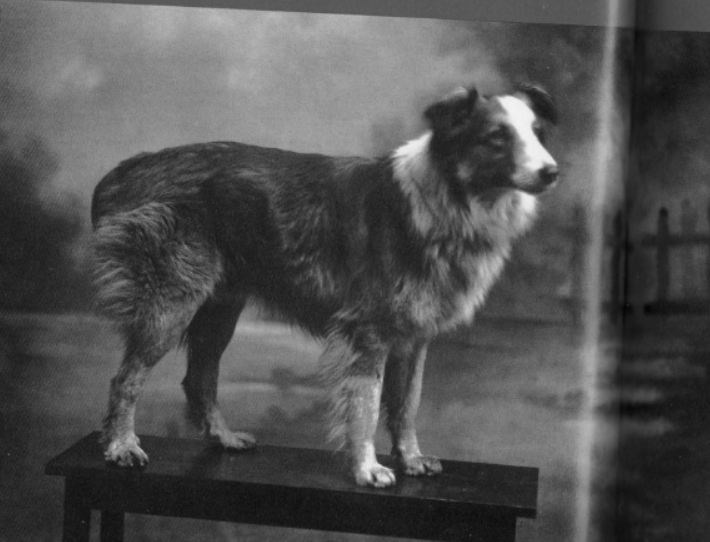
 Bobbie the Wonder Dog

Nearly a century ago, a family from Oregon was vacationing in Indiana—over 2,000 miles (3,200 km) away—when they lost their beloved dog, Bobbie. The frantic family searched for the dog everywhere but to no avail. Bobbie could not be found.

Heartbroken, they made the trip home, each mile taking them farther away from their cherished pet.

Six months later, the family was stunned to find Bobbie on their doorstep in Oregon. “Mangy, scrawny, feet worn to the bone—[he] appeared to have walked the entire distance … by himself.” Bobbie’s story captured the imagination of people across the United States, and he became known as Bobbie the Wonder Dog.

Bobbie is not the only animal who has baffled scientists with an amazing sense of direction and instinct for home. Some monarch butterfly populations migrate 3,000 miles (4,800 km) each year to climes better suited for their survival. Leatherback turtles travel across the Pacific Ocean from Indonesia to the coasts of California. Humpback whales swim from the cold waters of the North and South Poles toward the equator and back. Perhaps even more incredibly, the arctic tern flies from the Arctic Circle to Antarctica and back every year, some 60,000 miles (97,000 km).

When scientists study this fascinating behavior, they ask questions such as “How do they know where to go?” and “How does each successive generation learn this behavior?”

When I read of this powerful instinct in animals, I can’t help but wonder, “Is it possible that human beings have a similar yearning—an inner guidance system, if you will—that draws them to their heavenly home?”

I believe that every man, woman, and child has felt the call of heaven at some point in his or her life. Deep within us is a longing to somehow reach past the veil and embrace Heavenly Parents we once knew and cherished.

Some might suppress this yearning and deaden their souls to its call. But those who do not quench this light within themselves can embark on an incredible journey—a wondrous migration toward heavenly climes.

God Calls to You

The sublime message of The Church of Jesus Christ of Latter-day Saints is that God is our Father, that He cares about us, and that there is a way to return to Him.

God calls to you.

God knows your every thought, your sorrows, and your greatest hopes. God knows the many times you have sought Him. The many times you have felt limitless joy. The many times you have wept in loneliness. The many times you have felt helpless, confused, or angry.

Yet, no matter your history—if you have faltered, failed, feel broken, bitter, betrayed, or beaten—know that you are not alone. God still calls to you.

The Savior extends His hand to you. And, as He did to those fishermen who stood long ago on the banks of the Sea of Galilee, with infinite love He speaks to you: “Come, follow me.”

If you will hear Him, He will speak to you this very day.

When you walk the path of discipleship—when you move toward Heavenly Father—there is something within you that will confirm that you have heard the call of the Savior and set your heart toward the light. It will tell you that you are on the right path and that you are returning home.

Since the beginning of time, God’s prophets have urged the people of their day to “hearken unto the voice of the Lord thy God, … keep his commandments and his statutes … , [and] turn unto [Him] with all thine heart, and with all thy soul.”

Your Life Will Be Better

I testify that when we embark upon or continue the incredible journey that leads to God, our lives will be better.

This does not mean that our lives will be free from sorrow. We all know of faithful followers of Christ who suffer tragedy and injustice—Jesus Christ Himself suffered more than anyone. Just as God makes the “sun to rise on the evil and on the good,” He also allows adversity to test the just and the unjust. In fact, sometimes it seems that our lives are more difficult because we are trying to live our faith.

No, following the Savior will not remove all of your trials. However, it will remove the barriers between you and the help your Heavenly Father wants to give you. God will be with you. He will direct your steps. He will walk beside you and even carry you when your need is greatest.

You will experience the sublime fruit of the Spirit: “love, joy, peace, longsuffering, gentleness, goodness, [and] faith.”

These spiritual fruits are not a product of temporal prosperity, success, or good fortune. They come from following the Savior, and they can be our faithful attendants even in the midst of the darkest storms.

The fires and tumults of mortal life may threaten and frighten, but those who incline their hearts to God will be encircled by His peace. Their joy will not be diminished. They will not be abandoned or forgotten.

“Trust in the Lord with all thine heart,” the scriptures teach, “and lean not unto thine own understanding. In all thy ways acknowledge him, and he shall direct thy paths.”

Those who heed the inner call and seek God, those who pray, believe, and walk the path the Savior has prepared—even if they stumble along the path at times—receive the consoling assurance that “all things shall work together for [their] good.”

We Can’t Get There on Autopilot

We are, each one of us, “strangers and pilgrims” in this world. In many ways, we are far from home. But that doesn’t mean we need to feel lost or alone.

Our beloved Father in Heaven has given us the Light of Christ. And deep within each one of us, a heavenly stirring urges us to turn our eyes and hearts to Him as we make the pilgrimage back to our celestial home.

This requires effort. You cannot get there without striving to learn of Him, understanding His instructions, earnestly applying them, and putting one foot in front of the other.

« Older posts Newer posts »